Presence and vacancy timing
Publish presence states for automatic switching and delayed off. Test seated occupants, obstructions and mounting at real workstations.
BOSIDENG · Smart Lighting
The project concerns smart lighting and scene control in garment manufacturing. Explore how presence sensing, daylight dimming, gateways and KT-EMS can support similar workshops.
Solution reference: the product combination, diagrams and steps below support planning for similar workshops. Actual site configurations follow project delivery documents.
Define zones around work areas, aisles and daylight, then choose sensors and actuators. Verify functions, drivers and communications during a pilot.
Publish presence states for automatic switching and delayed off. Test seated occupants, obstructions and mounting at real workstations.
Map lux readings to five PWM brightness bands. Configure window-side and interior zones separately and verify driver compatibility.
Group circuits by work area with automation and local operation. DCS controls one two-way circuit; dimming requires a compatible actuator.
Provision, group and read settings back with the Android app. Retain zone records for replacements, tuning and maintenance.
Connect lighting to platforms with MQTT reporting and control. Test network loss, local automation and recovery separately.
Review nodes, groups, schedules and reports by area. Use alarms for operations and actual metering and production conditions to assess savings.
KT-MESH
Grouped sensors publish states to switches or dimmers. KT-LINK handles setup and readback; KT-GW connects to KT-EMS for central management. Local automation requires power, correct settings and reachable Mesh links.
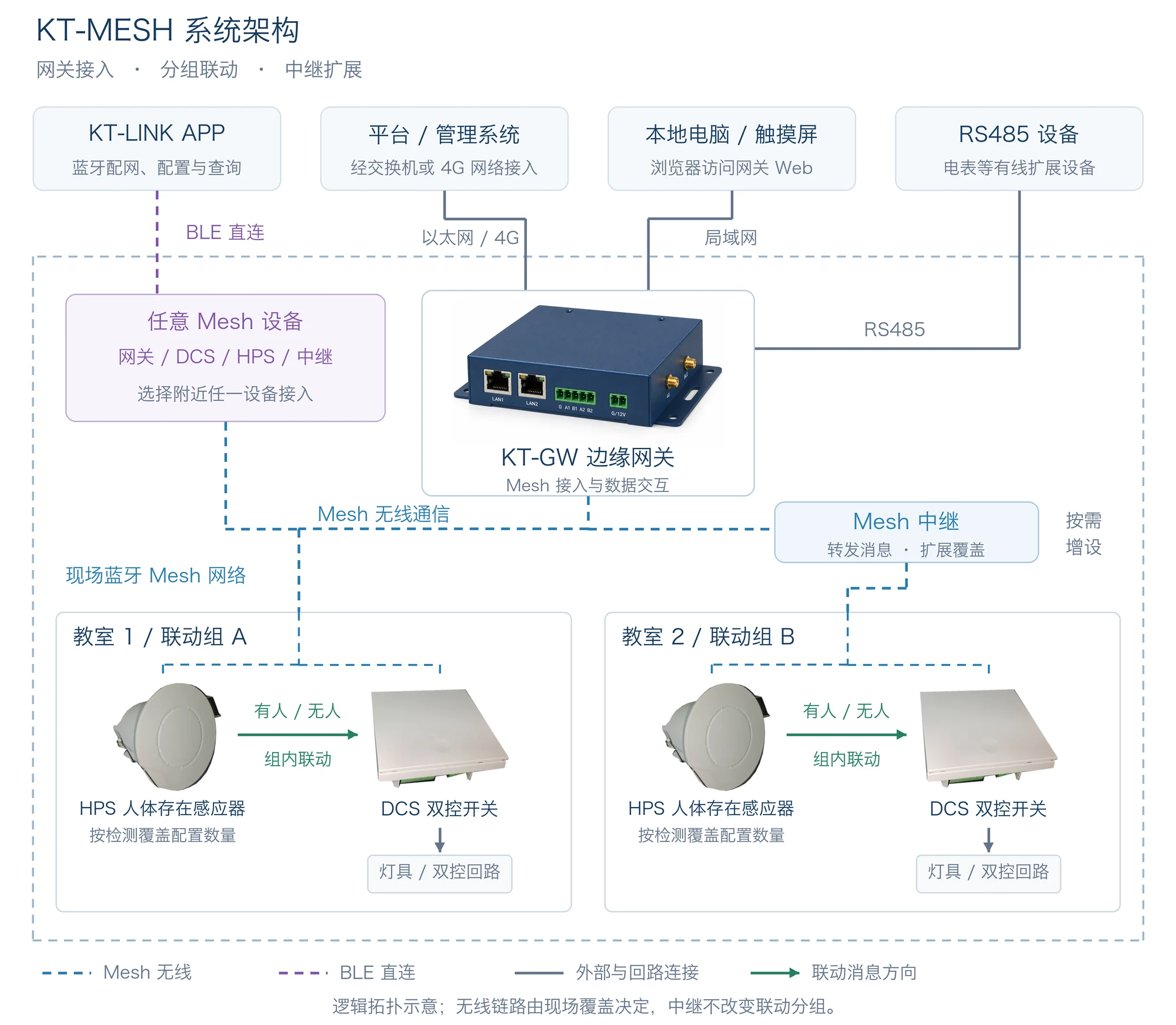
Record workstations, daylight and shifts; check fixtures, drivers and power to define sensing, dimming and manual control.
Verify coverage, Mesh links, group isolation, delays and dimming; tune for actual work and record results.
Verify nodes and circuits, gateway reporting, permissions, schedules and alarm handling.
Hand over configuration and maintenance procedures, observe real shifts and review strategies using metering.
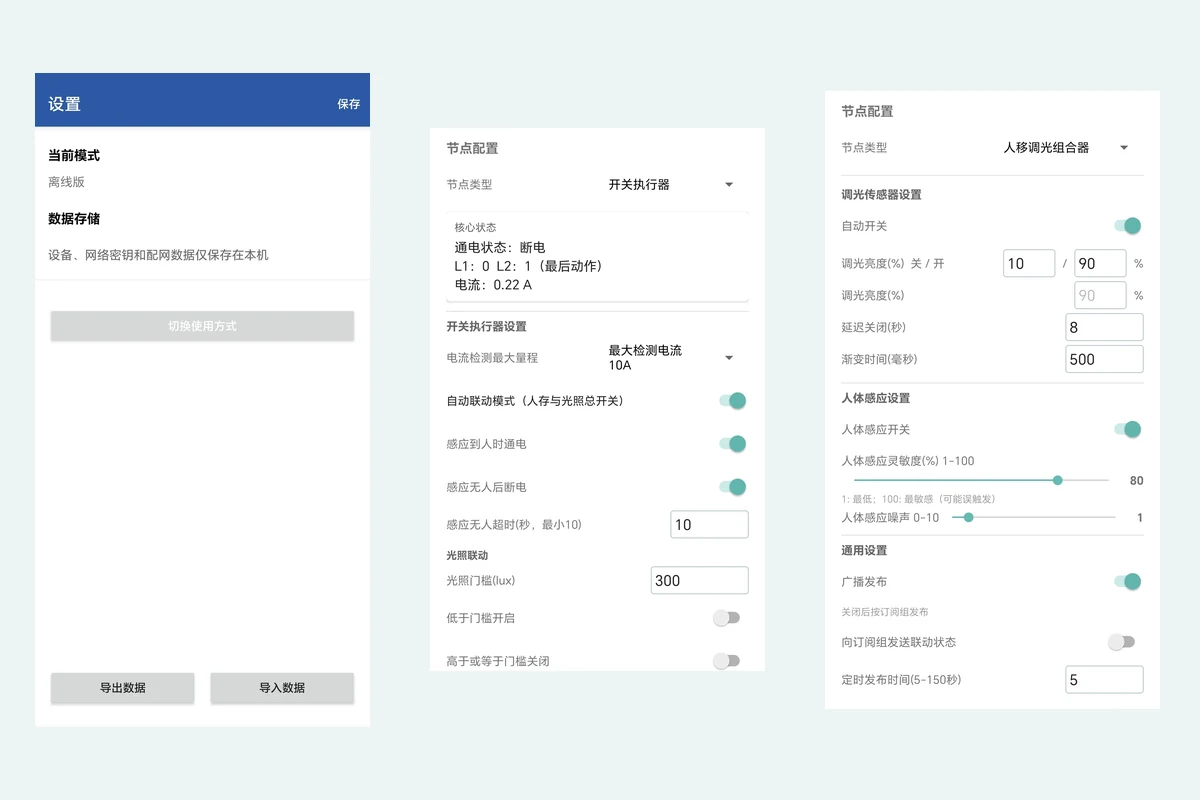
KT-LINK
Maintain nodes, groups and settings with KT-LINK. Test automatic and manual operation separately. Pilot a representative zone, record configuration and results, then expand.
KT-LINK →Share zones, fixture and driver models, circuit counts, shifts and control goals to assess sensors, actuators, gateways and platform needs.
Discuss workshop lighting